



Nonprofit Video Storytelling: How to Tell Authentic Stories That Inspire Action and Donations
Discover how nonprofit video storytelling creates authentic connections, builds donor trust, and inspires people to support your mission.
There is a version of nonprofit storytelling that raises money and quietly costs you something more valuable. You have seen it. The slow piano, the tearful subject, the voiceover explaining what the person on screen apparently could not, the camera lingering a beat too long on someone's worst day. It works, briefly. It also teaches your donors that the people you serve are helpless, and it teaches the people you serve that their pain is your fundraising asset.
There is another version, and it raises more money over time. It treats the storyteller as the author of their own life, finds the narrative rather than manufacturing it, and trusts the audience to feel something without being instructed to. That is the craft this guide is about, the same craft that anchors nonprofit video production built on authentic storytelling. Getting it right is a skill, and it is learnable.
Why Story Beats Information Every Time
Nonprofits are drowning in information they desperately want donors to absorb. Program outcomes, service numbers, cost per beneficiary, geographic reach. All of it matters, and almost none of it moves anyone.
The reason is not that donors are shallow. It is that human beings are built to process narrative, not data. A statistic is something a donor evaluates, while a story is something a donor experiences, and only experience produces the emotional conviction that precedes a gift. Your numbers give a donor permission to believe. Your story gives them a reason to care in the first place.
This is why the strongest nonprofit videos contain far less information than the organization initially wanted to include. The story deserves attention. Facts then confirm what the story already made the donor feel.
Whose Story Is It, Really?
Before touching structure or craft, answer the question that determines whether your storytelling will be authentic or extractive.
The story belongs to the person who lived it. Your organization is not the author. It is not the protagonist. It is, at most, a supporting character who arrived at a useful moment in someone else's life.
The Savior Narrative and Why It Backfires
The savior narrative casts the organization as rescuer and the beneficiary as rescued. It is seductive because it flatters everyone: the staff feel heroic, the donor feels generous, and the fundraising numbers respond.
It fails on a longer horizon. Donors gradually learn that beneficiaries are passive, which means giving is charity rather than investment, which means their gift is a moral transaction rather than a partnership in change. Meanwhile, the people you serve watch themselves portrayed as objects of intervention rather than agents of their own progress.
Agency Is the Antidote
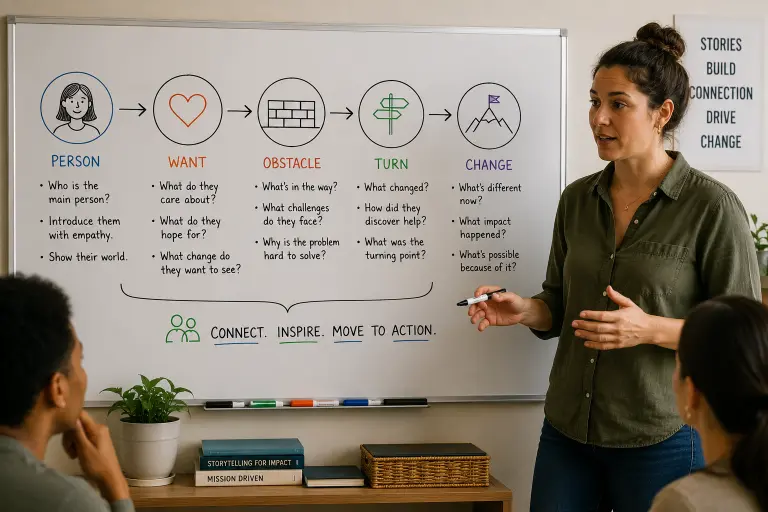
Authentic nonprofit video storytelling places the person at the center of their own narrative. They wanted something. They faced obstacles. They made decisions. Your organization provided a resource, an opening, a tool, and they used it.
This is not a softer story. It is a stronger one. A donor who watches someone reclaim their own life gives to possibility, while a donor who watches someone be rescued gives to pity, and pity has a shorter half life than possibility.
The Architecture of a Story That Moves People
Every story that works, in any medium, contains the same load bearing elements. Nonprofit video is no exception.
A Specific Person, Not a Category
Not survivors, not students, not the unhoused. A person with a name, a face, a way of talking, and a life that existed before your organization entered it. Categories produce sympathy. Individuals produce empathy, and only empathy opens a wallet.
A Want, Clearly Stated
Every compelling story begins with someone who wants something. Not what they need in the language of your program logic model, but what they wanted in their own words. Stability. To see their kid graduate. To sleep somewhere safe. To finish what they started.
An Obstacle That Feels Real
The obstacle is where most nonprofit storytelling either flinches or exploits. Neither serves. Name the difficulty honestly, without dwelling in it and without sanitizing it. The obstacle is not the story's destination. It is the reason the story has stakes.
A Turn
Something changed. Somebody made a decision, an opportunity appeared, a door opened. This is the hinge of the entire narrative, and it is where your organization typically appears, briefly and without fanfare.
A Changed Situation
Not necessarily a triumphant ending, because life rarely provides one and audiences can tell when you have imposed it. What is required is movement, evidence that things are different than they were. Donors give to progress, and progress is what an honest changed situation demonstrates.
Drawing the Story Out Without Putting Words In
The interview is where storytelling actually happens. Everything else assembles what you gathered here.
Build trust before the camera arrives. Someone meeting a film crew for the first time will perform rather than speak. A prior conversation, an explanation of the process, and an honest answer to why I all produce a more genuine interview.
Ask about moments, not opinions. Tell me about the day you decided to leave and produce a story. Tell me how the program helped you produce a testimonial that sounds like a testimonial.
Let silence do the work. The most valuable material in nearly every nonprofit interview arrives three seconds after the subject believes they have finished answering. Do not fill that gap.
Never supply the emotion. Prompting someone toward tears, or suggesting the phrasing you want, converts a person into a performer. Audiences detect this instantly, even when they cannot articulate what feels off.
Ask what they want people to understand. This single question frequently surfaces the truest and most usable line in the entire interview, because it hands the storyteller authorship over their own message.
The Traps That Sink Nonprofit Storytelling
Four failures account for most nonprofit videos that do not work. Each is avoidable.
Explaining instead of showing. A narrator telling the audience that a family struggled is weaker than watching the family speak for ninety seconds. Every line of voiceover you cut is a line the audience gets to discover for themselves.
Making the organization the protagonist. Video that opens with your founding, your model, and your staff has already lost the donor. Your organization is not what they came to feel something about.
Suffering without change. A video that establishes need and stops has simply asked the audience to feel bad. Discomfort without a path to action produces guilt, and guilt makes people close the tab.
Saying everything. Your organization does many things. This video is about one. The impulse to include every program, every population served, and every outcome is the impulse that turns a story back into a brochure. Save the rest for your marketing and promotional videos and your annual report.
Turning Storytelling Into an Organizational Practice
The best nonprofit storytellers are not the ones with the best video budget. They are the ones who built a habit of noticing stories as they happen.
Program staff encounter extraordinary moments constantly and rarely recognize them as narrative, because to them it is simply Tuesday. Create a simple channel for staff to flag stories worth capturing. Ask about consent and comfort early rather than in a rush. Keep a running list.
When production time arrives, an organization with a living story bank chooses the strongest narrative available, while an organization without one settles for whoever is willing on short notice. That difference shows up in the final film every single time.
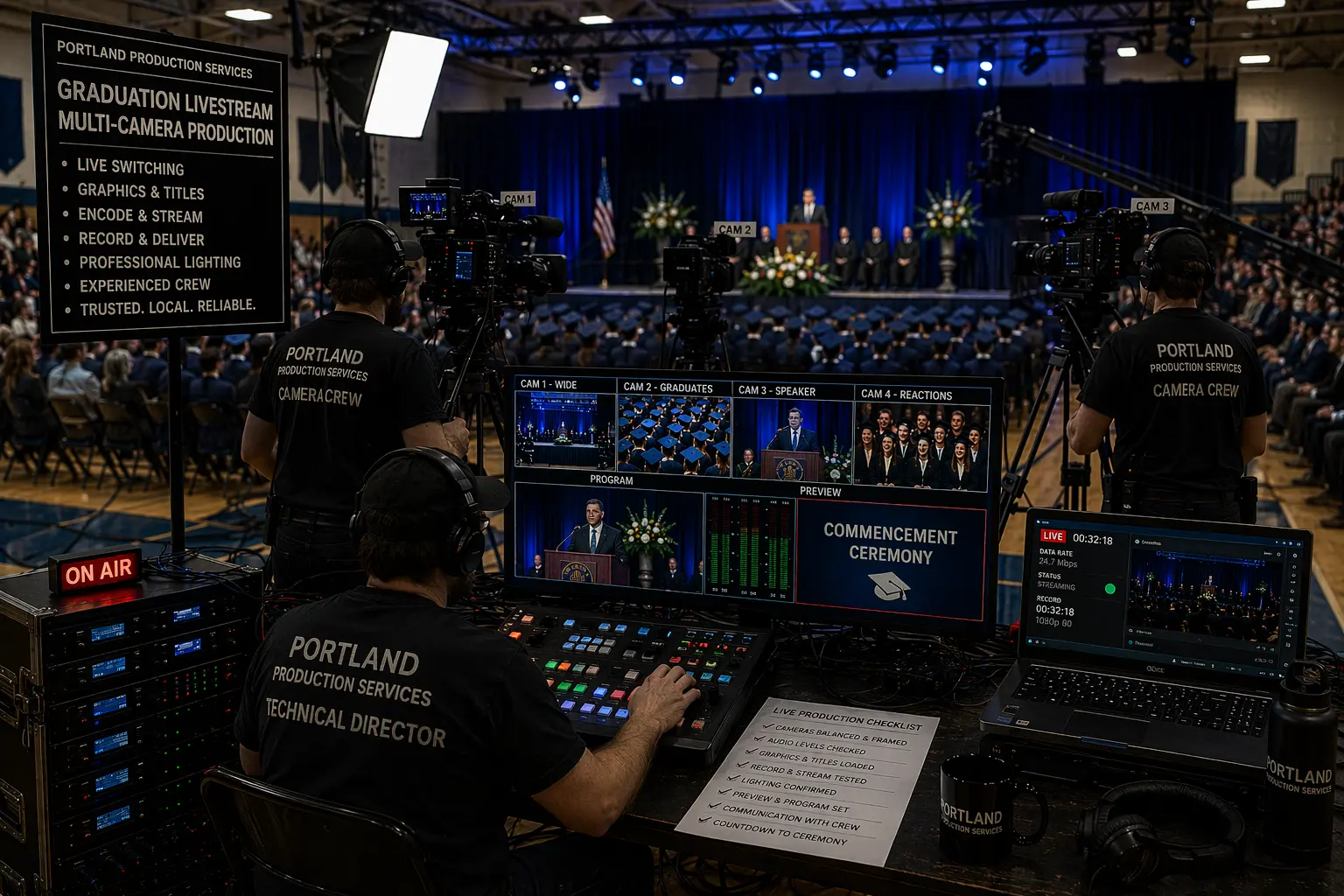
This practice extends to your live moments too. Galas, program milestones, and community gatherings are dense with story, and organizations that pair event production and live streaming with intentional story capture leave those events with material that funds the following year.
Storytelling in Portland and the Pacific Northwest
Portland's nonprofit sector is unusually dense and unusually collaborative, spanning housing, food access, environmental protection, arts, and health equity. The organizations doing this work are often small teams carrying enormous responsibility, and their stories are correspondingly rich.
Portland Production Services has filmed with Pacific Northwest organizations for more than 20 years, with fully owned equipment and an in-house crew working across Portland, Beaverton, Hillsboro, Lake Oswego, Tigard, and Vancouver, WA. That local presence matters for storytelling specifically, because trust is built in person and over time. A crew that understands the communities being filmed, and can return without a travel budget attached, gathers stories that a team parachuting in never will.
Owned gear matters here too. The story does not happen on schedule, and a team that controls its own equipment can move when a moment presents itself rather than waiting on a rental house.
Tell the Truth Beautifully
Authentic nonprofit video storytelling is not a softer approach adopted for ethical reasons at the cost of results. It is the approach that produces better results, because donors are far more perceptive than fundraising convention assumes. They can tell when a story has been shaped to extract from them, and they can tell when a person on screen has been trusted to speak for themselves.
Find the real story. Protect the person telling it. Get out of the way. The money follows the truth.
Let's Find the Story Only Your Mission Can Tell
Portland Production Services has helped Pacific Northwest nonprofits tell authentic stories for more than 20 years, with owned gear, an in-house crew, and deep respect for the people whose lives appear on screen.
Book a consultation with Portland Production Services and bring us the story your team cannot stop thinking about. We will help you tell it the way it deserves.
Already worked with PPS? Share your experience in a quick review and help the next nonprofit tell its story with care.
Frequently Asked Questions
1.What is nonprofit video storytelling?
Nonprofit video storytelling is the practice of communicating a mission through the narrative of a real person rather than through information and statistics. It centers a specific individual, follows a recognizable arc of want, obstacle, turn, and change, and positions the person as the author of their own story. Done authentically, it inspires action because audiences experience the story rather than evaluate it.
2. How do nonprofits tell authentic stories without exploiting people?
Authentic storytelling begins with consent that is genuinely informed and continues by treating the storyteller as the protagonist rather than an object of intervention. Ask about moments instead of opinions, never supply emotion or scripted lines, and show people with agency rather than only with need. The test is whether the person would recognize themselves and feel respected watching the finished film.
3. What makes a nonprofit story inspire donations?
Stories inspire donations when they feature one specific person, name a real want, present an honest obstacle, show a turn, and demonstrate genuine change. Donors give to visible progress rather than to suffering alone, and they give more consistently when the person on screen has agency. Positioning the donor as the one who made the change possible strengthens the response further.
4. What is the savior narrative in nonprofit storytelling?
The savior narrative casts the organization as rescuer and the person served as passively rescued. It can raise money in the short term but teaches donors that beneficiaries lack agency, reducing giving to charity rather than partnership. Stories that place the person at the center of their own progress build more durable donor relationships and treat the storyteller with greater dignity.
Key Takeaways
- Story beats information because audiences experience narrative and merely evaluate data. Your numbers give donors permission to believe, but your story gives them a reason to care.
- The story belongs to the person who lived it. Avoiding the savior narrative and centering the storyteller's agency produces both more ethical and more effective nonprofit video.
- Every story that moves people contains the same architecture: a specific person, a stated want, an honest obstacle, a turn, and a changed situation.
- Draw stories out rather than putting words in, and build a story gathering habit across your staff. PPS brings 20+ years of Pacific Northwest experience, owned gear, and a local crew to stories that deserve care.
There's more ...

Unleash Your Inner Creative Madness With Us!
info@portlandproductionservices.com
503-317-6447
© Portland Production Services 2026
8816 SE 29TH AVE
MILWAUKIE OR 97222-6323, US

